
Ezra Klein and Derek Thompson’s “Abundance” opens with a compelling vision for the future. In this future, green energy is so abundant that it’s practically free. Superabundant energy unlocks a superabundance of everything else- efficient vertical farming and lab-grown meat have abolished food scarcity, while AI and automation have raised living standards even while drastically cutting working hours. Climate change has been averted, and vast swathes of land once needed for farming have been turned back over to the wilderness. All people share in the new prosperity and enjoy the benefits of a cleaner, more productive planet. Here, there is no tradeoff between economic development and climate change, no tension between growth and equality- we can have it all.
The problem is that “Abundance” never lays out a path to reach this future. The superabundant utopia envisioned in the book’s introduction fades out of view and never resurfaces again. The book’s chapters focus instead on exhuastive descriptions of contemporary problems, like why California’s high-speed rail project has failed to make progress, why it’s so much easier to build new housing in Austin than in San Francisco, and why the National Institutes of Health don’t fund as much breakthrough research as they could. The authors’ analysis of these problems is convincing and often interesting, but the remedies they offer are both concerningly vague and very modest (including “exempt rail projects from normal regulatory hurdles,” “simplify zoning laws,” and “direct the NIH to weight grant proposals differently,” respectively). These kinds of recommendations may ease acute pressures but seem unlikely to launch us into a new era of superabundance.

In practice, “Abundance” is a work of investigative journalism posing as a polemic. The introduction gives a bold vision of the future and promises an assertive strategy to move towards it, but what the book actually delivers is a thorough dissection of current problems and some moderate proposals on how to manage them in the short term. Throughout the book, Klein and Thompson point out various ways that blue states are underperforming relative to red states (building housing and renewable energy) or that America as a whole is underperforming relative to other major countries (building high-speed rail, supporting breakthrough technology). The author’s recommendations, such as they are, are aimed at narrowing the gap between today’s low performers and high performers, not at achieving anything unprecedented. Incremental improvement, not transformation.
The book is long on explanations of why American institutions are performing so badly, much shorter on suggestions of how to improve them, and nearly silent on matters of vision or long-term strategy. This is in keeping with the talents and proclivities of the authors, both veteran policy journalists who are much more comfortable analyzing the actions and proposals of others than making recommendations of their own. This kind of wonky analysis has its place, and Klein and Thompson are experts of the craft. But as readers and citizens, we need to be clear on what this approach can and can’t do. It might help us climb up the OECD rankings over the next few years, but it will not unlock the kind of superabundant future suggested in the book’s opening pages.
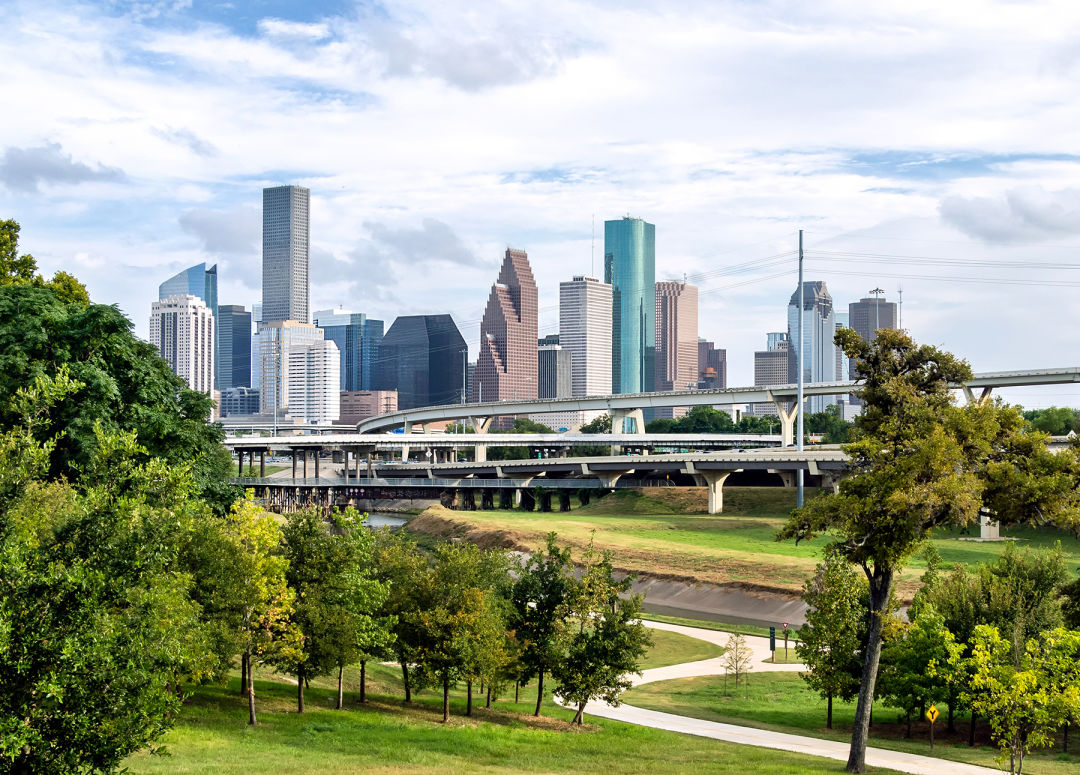
For a concrete example, let’s talk about Houston. “Abundance” makes several honorable mentions of the East Texas metropolis, favorably comparing the fast pace of construction, low cost of housing, low levels of homelessness, and speedy rollout of renewable energy projects in Houston to the much higher costs and slower development in Los Angeles, San Franscisco, and other blue state cities. As a longtime resident of Houston, I’m happy to say that we really are doing well on many of these metrics. But the simple fact that we are doing better than San Francisco on an issue does not mean that we have actually solved that issue, much less that we are living in a state of abundance. Los Angeles could bring its housing costs down to Houston-level prices, and that would be great, but housing still wouldn’t be superabundant. San Francisco could roll out solar panels at a Houston pace, but it still wouldn’t deliver superabundant energy. More would still need to be done.
Let me explain. Housing is much cheaper here than in California, yes, and that’s a very good thing for us, but most people wish that it was cheaper and more accessible still. We have far less homelessness than Los Angeles, sure, but no one who lives here would consider the issue “solved.” And while we are building renewables at a steady clip, we remain at the mercy of our famously unreliable electrical grid, iffy public transit, and vulnerability to extreme weather brought on by climate change. These are all serious problems that will require huge investments and policy changes to address. In short- we certainly have some good ideas to share with the West Coast, but if you’re looking for the “Abundance” utopia, it ain’t here. At least not yet.

With all that said, I recommend this book for two reasons- first, for what it does well, and secondly, for what it fails to do. “Abundance” is a very good work of policy journalism, deftly picking apart complex problems and providing us with a clear, even-handed assessment of what went wrong. At its best, it is highly informative and illuminating on the current state of affairs. But it is not a platform, a manifesto, or a strategy. Although some political commentators are already buzzing about “the abundance agenda,” there is no clear agenda in the pages of this book. The elevation of journalists like Klein and Thompson- rigorous and sober in their analysis of past policy, unimaginative and overcautious in their proposals for the policy of the future- into ideological leading lights reflects an intellectual crisis on the American left. How does something so modest pass for bold, ambitious, even visionary?
I plan to explore this further in future posts, but for now: I encourage you to read “Abundance,” but while you do, remember that what the authors don’t say is at least as important as what they do.


 Taylor H Lunsford
Leave a reply to Taylor Lunsford Cancel reply