
Donald Trump has been elected to a second term as President of the United States, winning both the electoral college and the popular vote. A national shift towards the Right pushed Trump to victory in every swing state from the Sun Belt to the Rest Belt and drove up the Republican share of the vote even in the most crucial Democratic strongholds. California and New York, two of the most solidly Democratic states, each swung 12 points towards Trump compared to the 2020 election. Results at the county level have been just as striking. Trump’s share of the vote spiked by 10 points in Los Angeles County, 18 points in Miami-Dade County, and more than 20 points in the Bronx. Democratic support collapsed in Texas’ Rio Grande Valley, previously one of the deepest blue regions in the country, with swings toward the Republicans as drastic as 25 points in some counties. These victories represent a breakdown in Democratic support in communities across America and the birth of a bigger, more diverse Trump coalition.
What does this historic election mean for American politics? Voters’ behaviors and preferences are clearly shifting, but why, and towards what? And what should we expect from this expanded MAGA coalition that now includes a larger share of younger voters and people of color?
How Did Trump Win?
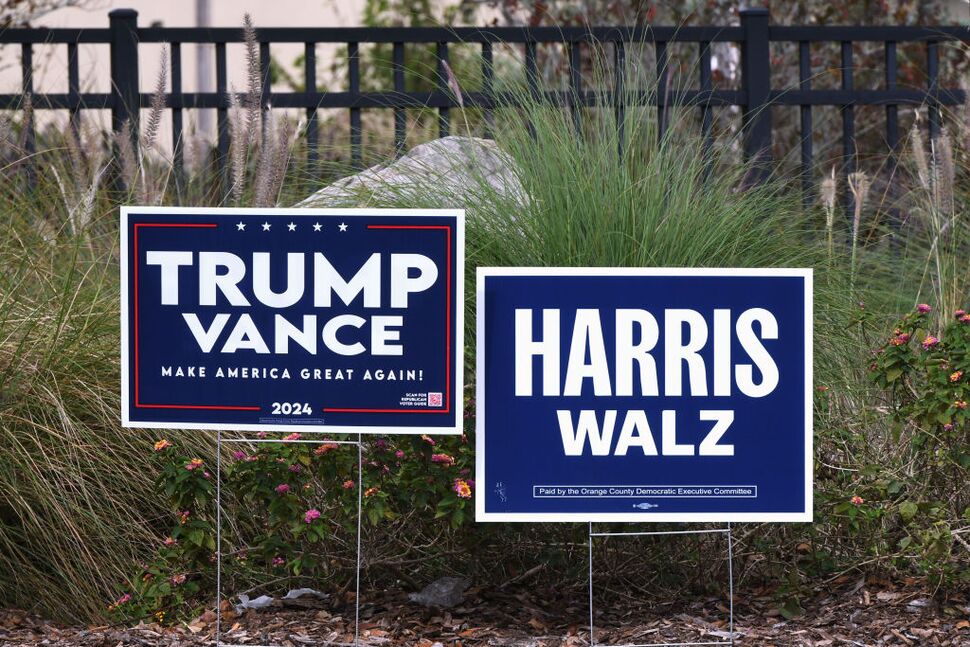
Before we try to interpret voters’ motivations based on these results, we first need to acknowledge that presidential elections are extremely flawed reflections of what Americans actually think. Millions of individual perspectives and nuanced ideas are flattened into simple, uniform choices: vote Republican, vote Democrat, or don’t vote at all. A vote for a candidate is not necessarily a strong endorsement of all their policies, so which of these three options a voter chooses can only give us broad hints about their views. Considering that most Americans do not follow politics closely and are not well-informed about candidates’ platforms, we can’t be sure that most voters even know all their chosen candidate’s policies. This means that the election results alone don’t give us much information on why voters chose the option they did or what outcomes they hope to see. Polling can fill some of these gaps, but they have their own serious limitations (as clearly shown by the gap between pre-election polling in this cycle and the actual outcome).
With those caveats out of the way, let’s start with the numbers: vote tallies and exit polling. These sources show us several clear shifts in the American electorate that any explanation must grapple with. First, we saw that Harris got significantly fewer votes across the country than Biden did in 2020 while Trump got almost three million more votes than he did in the last election. Biden’s winning coalition in 2020 brought in more than 81 million votes, setting the all-time record for any election in United States history. Harris brought in just under 74 million- still a strong turnout, but 7 million votes fewer than what Democrats had achieved just four years earlier. Trump, meanwhile, brought in 74 million votes in 2020 and almost 77 million in 2024- the second and third largest turnouts in American electoral history, respectively. The national shift towards the Right, visible everywhere from rural Pennsylvania to the metropolitan Bay Area, shows us that this attrition of 7 million or so Democratic votes, and the surge of more than 2 million new Republican votes, was spread broadly across the country, not concentrated in a few distinct regions or communities.
Secondly, the dividing lines of American politics are shifting in unexpected ways. Previous election cycles were dominated by the narrative of the Obama coalition- a young, diverse, upwardly mobile core of voters who would dominate America’s cosmopolitan future. This year, we saw that the Obama coalition is faltering, with startling Republican gains among young voters and people of color even in America’s biggest and most prosperous cities. Race, region, and age are becoming less powerful drivers of political identity. At the same time, the education divide has grown. The Democratic Party is increasingly the party of those who hold college degrees, while those who do not are breaking for the Republican Party in growing numbers. The implications of this shift are profound.
The third important factor to consider is a global one: high prices and sluggish growth are international problems, and incumbent parties across the globe have been punished at the polls for it this year. From Britain to Botswana, voters have rebuked ruling parties over poor economic performance regardless of whether those parties were ideologically right-wing, left-wing, or centrist. Although America has had a stronger recovery than other major countries, there is no denying that voters here are angry about their economic situation and that the Democrats have paid a price for holding office during bad times. The question for us to answer, then, is whether this was just a normal “hard times” election where voters punish the incumbent for failing to turn things around, or whether it suggests a deeper change in American politics.
The New Divide: College Education

According to exit polling, the education gap remains the single largest divide between Harris and Trump voters. Harris won college-educated voters by more than 10 points while Trump won non-college-educated voters by the same margin. Since there are more people without college degrees in America than there are college graduates, this resulted in a clear electoral victory for Trump. This substantial and growing gap raises the question of how life in America is different for those who have a college degree and those who do not. Economic data shows a wide and growing gap in the lifestyles of college graduates compared to the rest of the population. College graduates not only make more money and hold more wealth, but they also enjoy more stable employment, better employee benefits, and more comfortable working conditions. Workers without degrees earn less money, yes, but just as importantly, they are treated with less dignity in the workplace and in mainstream culture. This divide rose to absurd levels during the height of the pandemic, when white collar workers were shifted to safer, more convenient remote work while less-educated “essential workers” had no choice but to risk their lives for no personal gain. This tells us that the education gap is really a proxy for a new class divide, between the less-educated traditional working class and the better-educated “professional-managerial class.”
This election showed us that racial, religious, and regional gaps between voters are narrowing even as this education gap remains decisive. The declines in racial, religious, and regional polarization are good things, and should be recognized as such- they show that tensions along these lines are becoming less politically important, and will push both Republicans and Democrats to actively compete over constituencies that were once “safe” for one party or the other. Voter turnout is also up dramatically in the Trump era, both in absolute numbers and as a percentage of those eligible to vote, indicating that political engagement is as high as it has ever been. The steady rise of educational polarization, however, is troubling. It means that the Democrats- traditionally the party of organized labor and the industrial working class- now mostly serve the interests of well-educated, upper-middle class professionals. As the American labor movement withers and the Democratic Party continues to prioritize white collar interests, the working class is left without a political champion.
Even if we accept, as many have argued, that inflation and low growth were the main drivers behind Trump’s victory, educational polarization reveals a core injustice in modern America: one group of Americans has been relatively protected from these problems while another has been exposed to their full force. Since the pandemic, many well-educated workers went remote, maintained or even increased their incomes, took advantage of low interest rates to buy new homes, and continued to enjoy a steady flow of consumer goods brought to their door by Amazon or other delivery services. They experienced inflation mostly as an inconvenience while workers with lower incomes felt inflation as an immediate and significant cut to their standard of living. Less-educated workers continued to work in-person or were simply laid off, and felt little benefit from low interest rates or a rallying stock market. More and more blue-collar workers have joined the precarious, badly paid gig economy, where they provide white collar workers with everything from Uber rides to grocery delivery- while big tech capitalists take a cut of every transaction. Under conditions like these, how could there not be a massive social backlash against the professional-managerial class?
The Democrats in Crisis

Some liberal commentators have suggested that the political education gap is ultimately about perspective- college-educated people are supposedly better informed, more open to new ideas, and better able to think about politics rationally. Starting from the questionable assumption that Democratic policies offer everything a working-class voter could want, these commentators argue that the Democrats struggle with these voters only because of ignorance or bigotry. Implicitly, this view is built on an assumption that Democratic policy really is consistently better for everyone, and therefore the only reasons why anyone wouldn’t support the Democrats are ignorance and prejudice. It also implies that those who have had less formal education are less capable of being good citizens and ought to just listen to their intellectual and moral superiors. Once the working class can be educated to see things our way, they say, all political issues will be resolved.
This patronizing attitude alone is enough to convince many working-class voters that the educated urban liberal is their irreconcilable enemy. When any social group comes to believe that their own positions are unquestionably correct and that the rest of society must be educated to agree with them, they have turned their backs on genuine democratic principles. When that group also happens to be economically secure and culturally powerful, it can’t help but become a force for the status quo- crowding out the voices of those who desire real change. This is precisely what is happening to the Democratic Party. The Democrats dominated much of 20th-century American politics as the party of mass popular movements- from organized labor to the Civil Rights movement and the antiwar movement. The party’s capture by the professional-managerial class has killed its political ambition along with its popular momentum, making it more economically moderate, more socially elitist, and less politically effective.
For an example of how this dynamic works in real moments of political decision, we need only look back to the Black Lives Matter movement. In the wake of the murder of George Floyd, tens of millions of Americans took to the streets and grassroots organizations across the country advanced political demands ranging from policing and prison reforms to antipoverty measures. Although this movement won some important victories in state and local politics, the national Democratic Party and Democrat-held Congress repeatedly failed to pass even the most moderate, technical reform legislation. With a genuine mass political movement out in the streets on a scale not seen in decades, the Democratic Party ignored the potentially transformative elements of the movement, backed only its least ambitious policies, and even then failed to deliver on them, all while presenting an image of moral and intellectual superiority over both the conservatives who openly opposed the movement and the “radicals” who expected it to result in meaningful change. The Democratic Party antagonized everyone while pleasing no one- another mark of its growing disconnect from the majority of Americans.
As the Democratic Party continues to bleed working class support, too many left-of-center commentators have failed to consider whether the policies on offer really meet working class needs, and instead have leapt directly to blaming working class voters for being too uninformed, too irresponsible, or even too unintelligent to cast their votes for the correct platform. Harris did run on better pro-worker policies than Trump did, but her goals were very modest- some money to assist first-time homebuyers, for example- and given the experience of the past four years, voters are right to doubt whether even those small proposals could make it through Congress. Trump, in contrast, ran on essentially breaking the entire modern American political system and making way for something new. Americans, and especially less-educated, working-class Americans, rewarded Trump with a decisive electoral victory.
So does this mean that the American working class doesn’t know its own interests? Or does it mean that the Democrats are offering too little, too late? Is it not a damning indictment of politics-as-usual that so many Americans would rather take their chances with the MAGA wrecking ball than continue to live under the status quo? In the wake of this defeat, the Democratic Party has two options: listen to workers and come up with a plan to serve them better, or ignore their voices and retreat further into the losing strategy of professional-managerial elitism.
What Happens Next?

With months to go until Trumps’ second inauguration, there is little that we know for certain. Trump’s own policy positions are deliberately vague, and there are clear divisions in the MAGA camp between populists like JD Vance, billionaire oligarchs like Elon Musk, and traditional Republican holdovers like Mike Huckabee. It’s anyone’s guess which of these different wings will wield the most power in the next Trump administration, or what specific policies they will put into effect. And ultimately, Trump won this election because millions of younger, more diverse voters expect him to shake up the political system and deliver economic results; if his administration prioritizes his own personal vendettas or the ideological demands of MAGA diehards over the interests of this winning coalition, this new base of support could disappear.
What is clear is that the Democratic Party needs to adapt its strategy to remain competitive. The working class, once thought of as a safe Democratic constituency, is now in play, and the Democrats must offer working class voters something that is worth their time. Liberal commentators complain that Harris’ economic policies didn’t break through the noise of the campaign- I argue that they failed to do so largely because they were both small and technically complex. Bernie Sanders has had much less difficulty ‘breaking through’ with his more ambitious policies, just as Trump has dominated the discussion with vague but grandiose promises. Democratic efforts to embrace traditional Republican figures like the Bushes and Cheneys are similarly wrongheaded- if Republican voters still liked the Bushes and Cheneys, then Trump would never have been their nominee in the first place. A clear majority of American voters want change, even if they’re not certain exactly what kind of change they’re looking for, and establishment political figures like Dick Cheney (or, for that matter, Bill Clinton) clearly signify the status quo.
American politics is changing before our eyes, one way or another. Our best hope is that this leads to a new focus on the needs of the working majority, meaning not just better wages and more secure employment but more genuine worker power- bigger and more vigorous labor unions, more worker-owned businesses, and a louder voice for workers in the management of large firms. The party that can promise and deliver on an ambitious pro-worker platform will dominate politics in the coming decades. But if no party can step up- if the Democratic Party remains beholden to the professional-managerial class, or if the Republican Party stays captive to Trump’s cult of personality- then we may find ourselves in an era of anger, uncertainty, and strife.

 Taylor H Lunsford
Leave a reply to beowulf Cancel reply