
Although Confucius is famous around the world, his actual beliefs are still poorly understood in the West. What are the key principles of Confucianism, and how are they relevant today?
As I continue work on my translations of The Analects and other early Confucian texts, I’ve naturally been grappling with the principles and philosophical ideas they express. I’ve taken this opportunity to dig into the thousands of years of discourse on the subject, ranging from traditional Chinese commentaries by later generations of Confucians to modern scholarship by archaeologists, linguists, and historians from around the globe. The experience has deepened and clarified my understanding of Confucian thought, in turn making me a more capable translator of the source text.
Confucius is a challenging figure to write about, because nearly everyone on Earth has heard of him yet hardly anyone knows a thing about him. In the English-speaking world, fake Confucius quotes vastly outnumber real ones. Many of them are jokes, bordering on racial stereotypes; others are obvious misattributions, where the name “Confucius” is slapped onto an unrelated comment to give it an air of lofty antiquity.
A common example that you may have encountered before:
Choose a job you love, and you’ll never work a day in your life.
-Confucius
It doesn’t take an expert historian or philosopher to sense something is off with this quote. For one thing, “career choice” is a fairly modern concept, and it feels out of place for a man from Bronze Age China to take such an interest in it. For another, everything about the quote from its syntax to its message feels distinctly American. Sure enough, this quote bears no resemblance to anything found in the Confucian classics. An investigation into the origins of the quote found that it first appeared in writing in America in the early 1980s, and started being attributed to Confucius or other “Oriental sages” shortly after.
This illustrates the unique challenge in producing modern English translations of Confucian texts. Everyone thinks they already know something about Confucius, but what they think they know is based more on jokes, errors, and even pure fiction than on the man himself. Presenting Confucius to a modern English-speaking audience necessarily means addressing and confronting these misconceptions so that a more authentic image of Confucian beliefs can come through.
As I continue to translate and revise, I’ll post short essays here explaining aspects of Confucianism- its core ideas, its history, its relevance. To start, I’d like to introduce two key principles that defined Confucius’ teachings in The Analects and shaped the future course of Confucianism: ren (仁) and li (禮). These two principles serve as a gateway to understanding the Confucian perspective more generally.
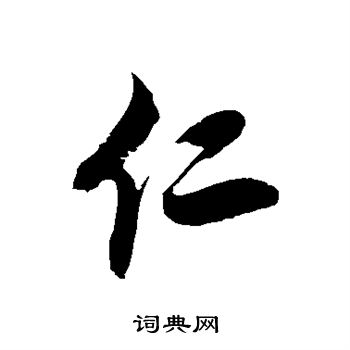
In The Analects, Confucius speaks of ren often but does not define it. He describes many markers of a person who possesses ren– they are brave and trustworthy; they choose their words carefully; they have few worries; they love humanity; and so on. Still, when asked directly whether a particular person is ren or not, Confucius most often says flatly: “I don’t know.”
This means that there is an important ambiguity at the center of what is arguably the most important virtue in Confucianism. Other virtues, like truthfulness, courage, or wisdom, appear as parts of ren, or as steps along the way to attaining it, but ren is somehow more than the sum of these parts. Ren is a mystery, impossible to define yet present everywhere, close at hand and yet difficult to practice fully. A person might reach a high level of attainment in many of the virtues that constitute ren, and still fall short of ren itself.
Accordingly, various scholars have offered up a wide range of English translations for ren, ranging from “benevolence” or “virtue” to “magnanimity” or even “manliness.” The Belgian sinologist Simon Leys, who produced my personal favorite translation of The Analects, renders it simply as “goodness.” This range of translations gives some idea of how broad ren is, how many other virtues it contains, and how impossible it is to find a single English word that corresponds to it perfectly.
Still, a few things can be said of ren with certainty. First, it is a lifelong aspiration, something which a person can and should continuously pursue until their death. Secondly, it is a social virtue. It can only be practiced, developed, and expressed through communion with other people. These twin aspects of ren– the lifelong pursuit of individual growth in parallel with the lifelong need for interpersonal bonds and community life- provide the foundation for the entire Confucian way. As Confucius says in The Analects: “Virtue never lives alone. It must have neighbors.”
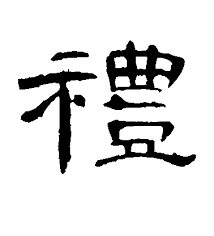
The second key Confucian ideal, li, is less mysterious than ren but still widely misunderstood. The word originally referred to sacrificial rituals, the key religious practice of the ancient Chinese which connected them to the spirits of their ancestors and to the gods of the natural world. By Confucius’ time, the meaning of the word had expanded to include a much wider range of ceremonies and the underlying rules that governed them. As such, the term is often translated at “rites,” “ritual,” “propriety,” or similar, capturing its relationship to politeness, courtesy, and good form in social settings.
In the highly ceremonial society of ancient China, li traditions governed how a man should greet his friends, how he should salute his ruler, how he should mourn a deceased family member, and so on. Daily life was a maze of li, each linked to a specific relationship or social situation. Consequently, li naturally came to mean something like “norms” or “mores,” the unwritten codes that define how people should behave in all kinds of situations and settings.
However, Confucians did not view li as a simple set of rules or conventions. The purpose of li, from the Confucian perspective, was to express important ethical principles through concrete actions. The li between friends were meant to express the trust and respect that they felt towards one another; the li between parents and children were meant to embody their bonds of love and gratitude; the li between living people and their gods and ancestors were likewise meant to build and maintain relationships between human beings and spirits. By following li, Confucians practiced a kind of mindfulness, paying close attention to what made each relationship unique and important and reflecting deeply on how best to fulfill their side of the connection.
In following the rules of li, which were sometimes very elaborate, the point was not technical accuracy but sincerity, enacting the rites with a true expression of feeling towards one’s counterpart. In this way, the deliberate practice of li in one’s relationships deepened empathy, understanding, and the sense of interconnectedness with other people and the world at large- all leading towards ren, the expansive virtue at the heart of all Confucian practice. At first glance, the ancient Chinese li seem like stuffy technicalities, but the Confucian emphasis on their inner meanings over their outward forms transforms them into profound spiritual practices.
Together, these two concepts form the bedrock of Confucian thought. Ren serves as the highest ideal, the lifelong aspiration that all people should pursue, while li defines concrete actions and behaviors that help in the progression towards ren. They reflect Confucianism’s focus on relationships and interdependence, on the understanding that individuals are part of a whole and define themselves by how they relate to their surroundings, in contrast to contemporary theories that focus (maybe too much) on independence, autonomy, and seperateness.
 Taylor H Lunsford
Leave a comment