
Last year, I wrote The Myth of the Thucydides Trap, criticizing the dominant narrative that the US and China are caught in a “great power transition” that is very likely to end in war. As I was worked, I felt confident that I was writing what many international relations experts already thought but hadn’t yet put into writing- that the Thucydides Trap concept was too hazy, that it didn’t have nearly enough evidence to support its argument, that its advocates hadn’t done their homework. I expected that most experts on East Asia would broadly agree with my critique.
But I didn’t expect to be vindicated by leading scholars so quickly. In October 2024, just three months after I published The Myth of the Thucydides Trap, two experts on East Asian history, diplomacy, and security published Beyond Power Transitions: The Lessons of East Asian History and the Future of US-China Relations, a book that aligns with and builds upon my critique of the Thucydides Trap. This book draws on 1,500 years of history to show that ideology, domestic politics, and shared values can, and often do, overrule the zero-sum logic of “power transition.”

The authors, Xinru Ma and David Kang, are both recognized experts on diplomacy and power politics in East Asia. Ma has produced research at Vanderbilt, Beijing Foreign Studies University, and Stanford, and Kang has taught international relations at USC, Stanford, Seoul University, and elsewhere. Each has a long list of publications on East Asian history and diplomacy. So naturally, when they read the Thucydides Trap argument- built entirely on case studies from modern Europe- they were not convinced.
Where I focused on critiquing the Thucydides Trap model itself, pointing out the ways that it misused evidence and failed to make good use of the work of earlier scholars, Ma and Kang take the next step and build a counterargument- even as power shifted and dynasties came and went, the international order of East Asia stayed remarkably stable because of shared beliefs about how great powers and lesser powers should relate to each other.
This in-depth review summarizes Ma and Kang’s arguments, and the case studies they look at in the greatest detail. Despite what realist theory predicts a great power should do, throughout history China has usually shown restraint and cut favorable deals with lesser powers. Korea, Vietnam, Japan and others have likewise acted in defiance of realist models by usually seeking peaceful accomodation with a dominant China rather than balancing against it. This means that realist assumptions, built almost entirely off the study of European great power struggles since 1500, are seriously misleading for many other parts of the world and maybe even for Europe in earlier (or future) eras.
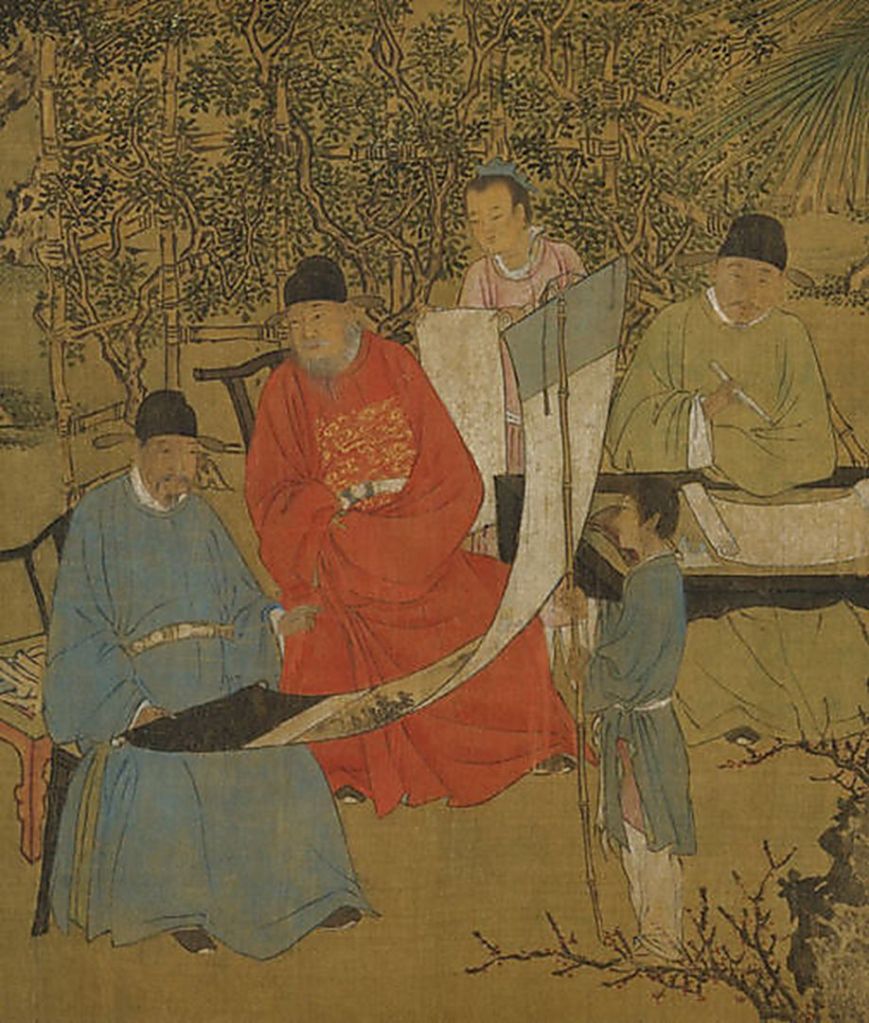
In short, it’s a mistake to study just one corner of the world- Europe- and assume that it represents all human experience. War and politics are as varied and unpredictable as humanity itself. While Europe was passing through an age of fierce competition and profound geopolitical uncertainty, the other end of Eurasia was undergoing one of peace, stability, and economic growth despite military stagnation. Both ended up being decisively important for world history.
In my next post, I’ll take a closer look at this age of relative peace and calm- the Confucian Long Peace- and what it means for our big-picture understanding of how nations and governments behave in different eras and contexts. In the meantime, check out my Amazon author page to learn more about The Myth of the Thucydides Trap and my original translation of the classic Art of War!
 Taylor H Lunsford
Leave a comment