Artificial intelligence promised to free us from work and give us more time for our relationships and our passions. So far, it’s doing the opposite.
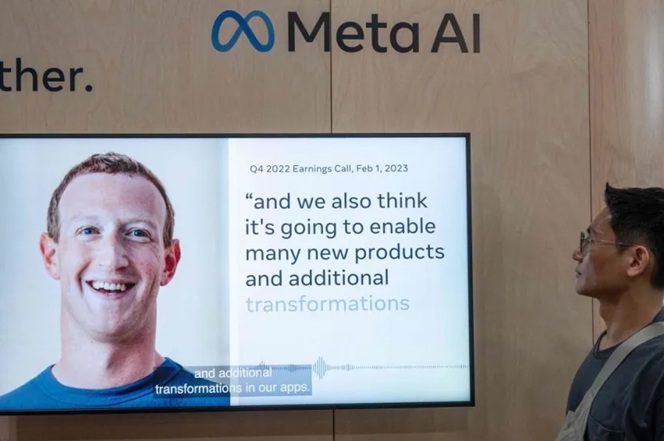
Since Meta launched their standalone AI app just over a month ago, huge numbers of users have asked the chatbot their most personal questions about health, finances, relationships, and more. We know this because many of them accidentally posted those questions to the app’s discovery feed, where they can be read by the entire internet.
Some of these inadvertent posts include private information like full names, addresses, and even details of court proceedings, all sent straight to a public feed. This is a serious violation of privacy, to be sure (just the latest of many involving Meta’s products). But I think the personal nature of these questions reveals something more deeply troubling, not just about how tech companies relate to us but about how we relate to AI.
Many of the questions that ended up awkwardly plastered on Meta’s discovery feed are the kinds of things we would expect people to take to a trusted confidant, if not a trained professional. Users aren’t just brainstorming with the AI or asking it to gather information- they often seem to be seeking advice, even validation. It seems that many of us are taking questions that we wish we could bring to a loyal friend and, seeing no one in our lives who we feel comfortable asking, are running them by glorified text prediction bots instead. Then, evidently, the less savvy among us end up accidentally sharing these private queries to Zuckerberg’s front page for all the world to see.
We’ve been told that AI is a tool to accomplish tasks faster, free us up from work and repetitive tasks, and create more time and space for the things that make life meaningful- our relationships, our ideals, our personal pursuits. But so far, we see the opposite happening. To date, most people have seen little or no benefit from AI at work. Instead, we’re using AI to speed up and simplify the things we do outside of work, the things we’re supposed to enjoy. For the heaviest users, AI isn’t just intruding on relationships- it’s even starting to replace them.
Outside of a handful of industries, AI-generated content simply isn’t good enough to pass off as wage-worthy work. Anything genuinely important is still expected to be done with little or no help from AI. But it’s evidently good enough to pass for so many things in our personal lives. We ask AI to write the messages we send to other human beings. We ask AI to spit out recipes for the meals we feed our families, to draw pictures for our kids, to summarize books we wish we had time to read. Then we go back to work. Later, in our private moments, we ask the AI the kinds of questions that we wish we could ask a trusted expert, a supportive friend, even a doctor or therapist.
This is the exact opposite of what AI is supposed to be delivering for us. Instead of incredible productivity at work and more room for our most human activities, we’ve got an AI that can serve as a crutch for an unsatisfactory personal life while “freeing” us to devote even more attention to career and consumption. Instead of economizing on work hours to create more time for everything else, AI encourages us to rush through everything outside of work. Especially for the white-collar professionals among us, there is then huge pressure to reinvest these “savings” of personal time back into your career. This would be troubling under any circumstances, but in a culture that already grapples with a loneliness epidemic, this is extremely disturbing.
What Comes Next?
This problem is partly about technology, and partly about culture. The AI models we have available to us now are decent – not great – at many tasks, and their main virtue is speed, not quality. Naturally, we’re going to use these tools for low-priority tasks where we care more about convenience than about the quality of the output. The more important something is to us, the less we think that AI can be trusted to handle it well. That’s the technological aspect of the problem.
The cultural aspect of the problem is more challenging. We’re given a tool that’s best used for unimportant, low priority tasks- and many of us have applied it mostly to our relationships and personal lives, not to work or other unpleasant obligations. The clear implication is that we don’t value our private lives as highly as we do our work, and we are ready and willing to sacrifice the former for the latter.
The good news is that the technological aspect of our AI problem may be solved very soon. Better AI tools, ones genuinely capable of speeding up many important jobs or even doing them autonomously, seem to be just a few years away. Once those better models arrive, we will really see benefits on the job across a huge range of industries, opening up the possibility of greatly reduced working hours and more time for everything else in life.
The bad news is that, without a shift in priorities, these explosive gains in productivity won’t actually mean people will be able to earn a full living with fewer hours on the job. For the last forty years or so, hours worked have held steady even though productivity has gone up continuously, thanks in part to the profileration of “bullshit jobs,” meaningless busywork that keeps people occupied for 40+ hours a week without actually accomplishing anything. Back in 2018, the anthropologist David Graeber found that more than a third of workers believed they were working a “bullshit job.” Super-productive AI could cut lead to sky-high hourly wages and deep cuts to time spent at work, or it could convert most of the remaining real jobs into “bullshit” ones instead, keeping us full-time busy even when our labor makes no longer makes a meaningful contribution.
To be blunt, working people won’t get reduced working hours unless they demand it. This is why it’s important to rethink this attitude of economizing on our personal time in order to become more “productive” on the job. Human productivity is rapidly becoming less important and less necessary. Who will you be if (or when) your job is automized away? If we make the right choices in the coming years, this could actually be an incredible opportunity to extend more freedom to every person. But we won’t realize this bright future unless we fight for it.
 Taylor H Lunsford
Leave a comment