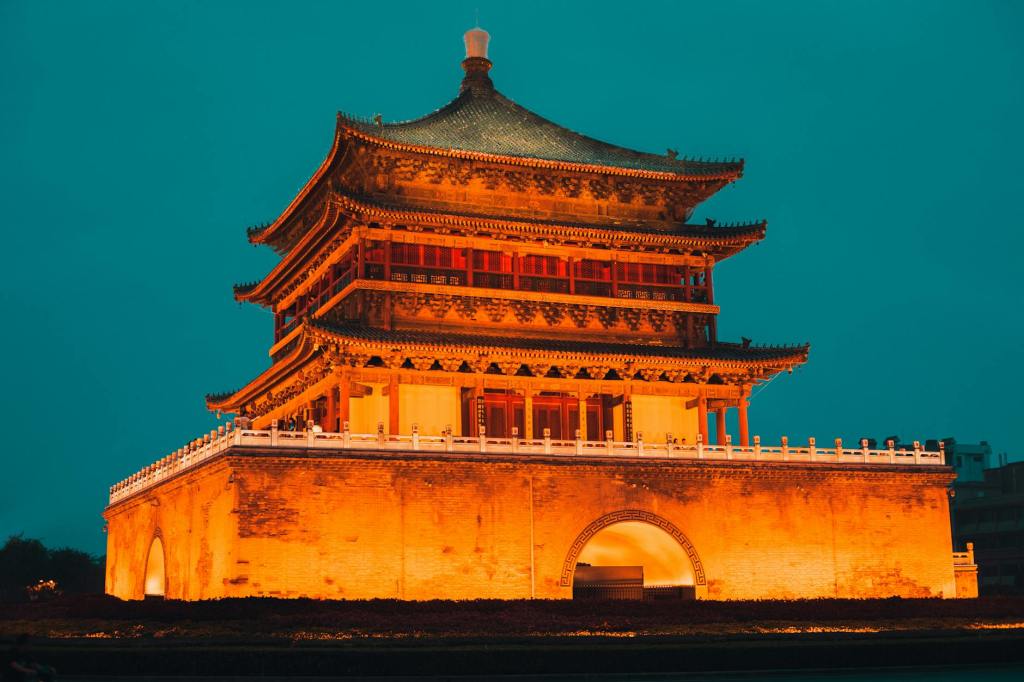
There may be no bigger cliche in Chinese studies than the claim that the country has a unique claim to “five thousand years of continuous history and civilization.” Chinese politicians weave it into speeches and policy documents, Chinese academics dutifully repeat it (even if they often know better), and Western commentators happily parrot it in books and other media. But where did this number come from, and what does it actually mean to have “five thousand years of civilization?”
The simple truth is that “five thousand years” is an arbitrary number. Winding the clock back to 3000 BC places us in the early phase of the Longshan culture, a Neolithic (“New Stone Age”) culture of the ancient Yellow River valley. The Longshan culture has an important place in Chinese prehistory to be sure, but it’s not clear why we should mark them out as the beginning of Chinese civilization. There are many other options, depending on what we think is essential. There are earlier Neolithic cultures like the Yangshao culture (c. 5000-3000 BC), who were similar to the Longshan people in most regards and who we could easily argue are just as important for the later emergence of “the Chinese.” If we wanted to be more rigorous and say that civilization requires metallurgy, then we might say that Chinese civilization begins with the Erlitou culture (c. 1900-1500 BC), the first Bronze Age culture of China. If civilization requires writing, then we start with the late Shang around 1300 BC. So depending on what yardstick we decide to measure civilization by, we can end up with was few as “three thousand years of civilization” or “more than seven thousand years of civilization” or any of a tremendous range of other options.
It should be clear that trying to nail down a precise start date for a civilization is a pointless endeavor, with the choice of date saying more about the biases of the person doing the choosing than about the civilization in question. Using these arbitrary dates to make comparisons across civilizations is even more futile. The answer to the question “which is older, Chinese civilization or Western civilization” depends entirely on how you define China and the West and what features you decide are essential to each. So when we say “China has 5,000 years of civilization” with the unspoken corrolary that the rest of the world does not, we’re making implicit choices about what it means to be civilized and what it means to have continuity with the past.
A comparison between China and Egypt may be instructive. Egypt was home to one of the earliest and most important Bronze Age civilizations, with a line of kings spanning more than two thousand years from the first unified dynasty to Egypt’s conquest by Persians, Macedonians, and Romans (as a point of reference, the unified kingdom of Egypt was founded while the Longshan people were still living in tiny chiefdoms). We associate ancient Egypt with pharoahs, heiroglyphs, and mummies, and since we know modern Egypt as an Arabic-speaking, majority-Muslim republic, it’s not difficult for us to imagine that at some point there was a clean break between ancient and modern. Their religion, language, and political system are completely different now, after all.

But wait! China’s religion, language, and political system are also completely different now than they were even one thousand years ago, much less five thousand. The proto-Chinese of the Neolithic and early Bronze Age practiced human sacrifice and believed that toothaches were caused by ghosts. Their languages had no written form and, while ancestral to modern Chinese, would have been completely unintelligible to a modern speaker (or a Middle Chinese speaker of one thousand years ago, or an Old Chinese speaker of two thousand years ago). Their political and social system was governed by chieftains and shamans. All of these elements have changed drastically over the course of Chinese history, and more than once.
If we look back now to Egypt and take its history as a whole rather than two isolated snapshots (ancient Egypt in the time of Tutankhamun, circa 1300 BC, versus modern Egypt in the time of Tahrir Square, 2011 AD), we see that there was never any clean break. At no point was ancient Egypt paved over to make way for modern Egypt. Egyptian religion, culture, and politics changed gradually over the course of many centuries. Ancient Egyptian religion faded under the late Roman Empire with the spread of Christianity, which in turn was mostly replaced by Islam several centuries later. The native Egyptian language was gradually displaced by Arabic (a language about as closely related to ancient Egyptian as Tibetan is to Chinese), but survives as a liturgical language in the Coptic Church. Egyptian Arabs, for their part, speak a distinctly Egyptian dialect. Even political change happened more gradually than many would assume, with Persian shahs, Macedonian kings, and Roman emperors claiming the title of pharoah for generations until it faded from significance. This doesn’t seem all that different from China’s gradual shifts that, we are told, represent “continuous civilization.”
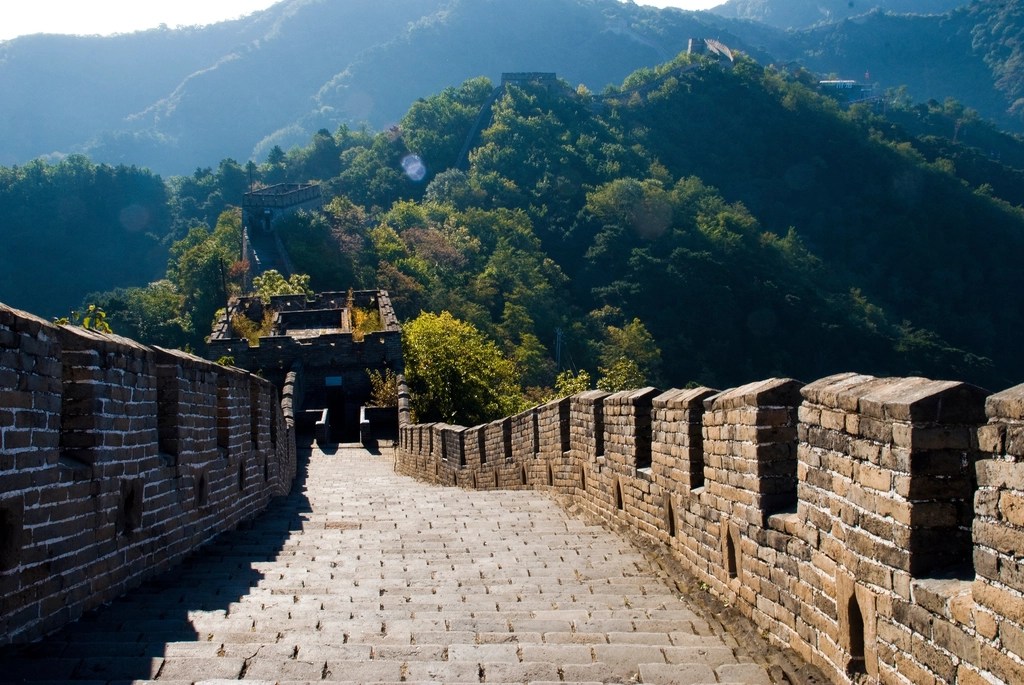
What are we to make of Chinese civilization, then? Like every other human culture, it is constantly changing- sometimes quickly, sometimes slowly, but never static. For the past century or so, the pace of change has been blisteringly quick and especially disorienting. The end of monarchy, rapid industrialization, the one-child policy, the emergence of China as a global power, and more have fundamentally shifted what it means to be Chinese in the space of just a few generations. In this light, we should understand that the “5,000 years of history” slogan is not really meant to be a statement of fact. It is a declaration, maybe a self-reassurance, that as much as things have changed and will continue to change in China, the past has not been entirely abandoned.
 Taylor H Lunsford
Leave a comment