We Westerners tend to believe that we are utterly different from our predecessors of even a century or two ago while other cultures have hardly changed at all over millennia. We like to think of ourselves as ‘liberated’ from the constraints of history- we can do whatever we like in the present- while others are stuck in a loop, doomed to repeat historical cycles. This type of thinking leads us to assume that China’s strategic culture is frozen in the time of Sunzi’s Art of War. In fact, Chinese thinking has evolved significantly over time and has changed particularly rapidly over the last 100 years, since the collapse of the last imperial dynasty and the birth of a Chinese nation-state.
The foundations of Chinese strategic culture date back to the Warring States period, circa 5th-3rd centuries BC. As the name “Warring States” suggests, this was an era of fierce competition between rival Chinese kingdoms, when rulers eagerly sought advice on how to win battles, secure alliances, and outwit their enemies. The famous Art of War was written in this era, along with other important strategic texts that are less well-known in the West like the Zhanguoce, the Wuzi, and the Weiliaozi. Strategic works of this era focused on how a state could unify diplomacy, military organization, and domestic policy to gain advantage over competitors, and emphasized subtlety and careful planning over battlefield heroics.
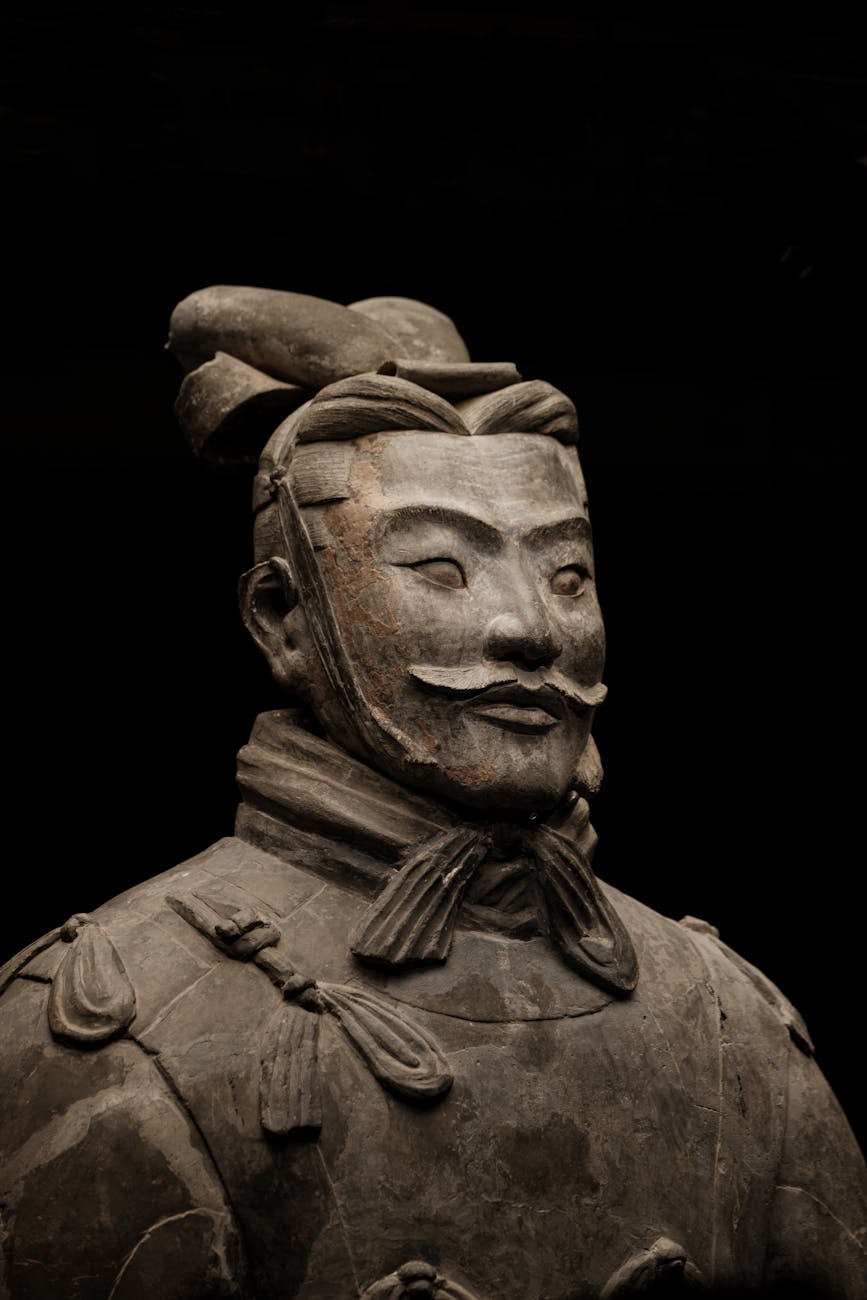
The kingdom of Qin won the Warring States-era arms race by militarizing society from top to bottom. It defeated and conquered each of its rival kingdoms by raising stronger armies, cultivating better generals, and launching bolder offensives. It then abruptly shattered into civil war. The Qin empire thrived in a time of war but could not survive in peace. This inaugurated a new era in Chinese strategic thinking, when strategists recognized the limits of force and emphasized the need to earn trust and legitimacy. Under the Han Dynasty, this meant rolling back the permanent war footing of the Qin and emphasizing stability over expansion. As the strategist Lu Jia told the Han founder Liu Bang, an empire could be won on horseback but could not be ruled from there.
Imperial China continued to wage war and sometimes to expand, but the Warring States mentality of placing military matters above all else had given way to a new sense that soft power was the key to both domestic stability and international influence. Generals and armies were seen to pose as much of a danger to the ruling dynasty as to its enemies, and power was instead concentrated in the hands of civilian officials trained in philosophy and literature. As maritime trade boomed under the Tang and Song dynasties, China also developed a tradition of winning friends abroad by granting diplomatic and economic favors to pliant rulers. By Ming times, this model solidified into the “tribute system,” which scholars like David Kang have argued represented a Confucian ideological bloc as well as a community of close trading partners.
The collision between the Qing Dynasty and the Western colonial empires led to another dramatic shift in Chinese strategic culture, which we clearly see the impact of today. After centuries as the preeminent power in East Asia, more concerned with internal stability than outcompeting rivals, China found itself a victim of first European, then Japanese military power. Chinese intellectuals scrambled for answers- what caused Chinese power to collapse so suddenly? How could the country be strengthened? The Qing royal house was torn apart by conflicts between conservatives and would-be reformers, and the last dynasty of China was brought down by a military revolt.
The Chinese experience from the mid-19th through the mid-20th century represented an abrupt and traumatic break from the past, and Chinese strategic culture was profoundly changed. Disappointed by the failure of traditional institutions under the Qing, Chinese intellectuals sought out Western ideas to explain the military and economic dominance of the European empires. They found nationalism, social darwinism, liberalism, Marxism, and a plethora of other concepts, which they adapted to understand China’s crisis and imagine paths forward.
With the founding of the People’s Republic of China in 1949, China’s official strategic culture came to be shaped by an unusual cocktail of influences- the classical strategic tradition of premodern China, yes, but also Western-style nationalism, the ideologies of Marx and Lenin, Mao’s personal idiosycracies, and the unprecedented realities of the Cold War. Since the 1970s, economic opening and rapprochement with the US-led international order have added yet another layer. This means that China’s strategic culture is anything but frozen in the past. It continues to adapt and grow, drawing on classical Chinese history as well as foreign ideas and new experiences. When we interpret Chinese grand strategy, we would do well to keep this in mind.
 Taylor H Lunsford
Leave a comment